About Jodi Kaplan

My Google Profile+

Are Offline Marketers Lazy?

image of lazy dogThis  post was inspired by a post on morecaffeineplease.  Greg was wondering whether offline only marketers were “leaving money on the table” and also why online and offline marketers are often so divided against each other.

Jeremy commented that he thought offline marketers were well, lazy, entranced by big numbers and splashy ad campaigns, rather than conversations.

I do agree that there are many brand advertisers who are captivated by big campaigns, and big awards.  Neither of those  result in conversations and don’t necessarily even make any money.

Conversation, Not Shouting

Whether your marketing is online or offline, it still has to follow the same rules.  Both will fail when they don’t build trust, offer value, or treat customers fairly.

A few days ago, BMW hijacked the front page of the New York Times online with an ad that couldn’t be shut off or bypassed. Clearly, they had no respect for the newspaper’s readers.

On the other hand, Jack Daniels bourbon has been having an ongoing conversation with a friend for years.  He’s the proud squire of 1 square inch of Kentucky land near the distillery.  They sent him a deed, and regularly send letters asking if he’s seen a lost mule, or enclosing pennies and odds and ends they “found” on his property. It’s all offline, and impossible to do online (until someone invents the Star Trek transporter).

Online is Faster

The primary difference is that online companies can respond to problems or opportunities much more quickly.  I posted a Freebie Friday SEO Fast Start report on my blog two months ago.  A few hours later, the author left a comment saying a new edition was coming out in a few days.

This is one important lesson many offline marketers have failed to learn.  Word spreads, and it spreads fast.

I complained online about a  bad experience at Victoria’s Secret (in short, they require a driver’s license or a passport (?!?) in order to return something, even with the receipt).  Nobody has contacted me, apologized, or responded in any way.  They clearly are not interested in having a conversation, only in glitzy marketing campaigns.  I will never, ever buy anything there again.

Photo: meaganjean

Do You Make These Five Common Postcard Marketing Mistakes?

postcard image

Photo: eperales

Have you run a b2b postcard marketing campaign, spent a lot of time and effort to send it, only to have it flop?

Someone asked recently why their postcard campaign failed. It turned out they had made some very common postcard marketing mistakes.

The company sells custom-painted decorative tiles.  They sent out 250 standard-size postcards with three pictures of the product on the front.

On the back, were bullet points promoting the products’ features.  These included the low prices, the ability to print 3-D images, durability, and the fact that they could imprint any size image on their tiles.

They were hoping people would call and want to buy their tiles right away.

The tiles were unique, the product was high quality, but the campaign didn’t do well.

What went wrong?

1. Asking for too much

The first marketing mistake that they made was asking for too much.  They wanted people to buy, based solely on a postcard.

Instead, use postcards to generate leads and interest, rather than asking for a sale right away. Offer something that’s easy to say “yes” to, preferably something either free or low-cost.  Give them a guide or a checklist or something with a high perceived value in return for contacting you.

2. No authority or trust

A postcard arriving out of the blue is not likely to make a sale unless it comes from a well-known business or it’s being sent to pre-existing customers. If they don’t know you, they are not likely to trust you enough to buy something immediately.  You have to gain their trust first.  This can be through an entry-level offer, or a series of postcards or mailings (depending on your budget) offering useful tips.

3. Not enough information

A better choice for a direct sale would be a lumpy mail package with a sample (if possible), a letter, and an offer of a guide with free decorating tips. The postcard didn’t have enough space to make the case for buying something high-end, customized, and expensive.

4. Selling the grass seed instead of the lawn

Part of the problem here was focusing on features, rather than benefits.  They talked about price and durability, rather than the joy of showing off and the pleasure their customers receive from looking at their new tile artwork.

The important thing isn’t what people actually get; it’s how they feel about it that counts.

5. No proof

There wasn’t any outside proof of what the company was claiming.  The entire postcard was self-focused, rather than outwardly focused.  Testimonials from happy customers would have helped prove what the company was saying.  They also help reinforce that the business is trustworthy and credible.

What you say about yourself isn’t as believable as what someone else says about you.

An Easy Way to Get More Downloads

Offering a free report on your Web site is a great way to get more prospects. However, after you’ve spent lots of time writing the report, designing it, and putting together a campaign to promote it, it’s easy to overlook one simple thing that can make a huge difference in how many people ask for your report.

Ask for as little information as possible; if you want it to go viral, don’t put any barriers at all. Just include your contact information at the end and encourage people to pass it on.

If you’re interested in building your list, just ask for name and email address. You’ll find that conversion rates will jump considerably. A friend just put up a report asking for 10 fields (name, company, street, city, state, country, postal code, etc.). I didn’t want to fill all that in, and I know the guy!

The Biggest Mistake Advertisers Make

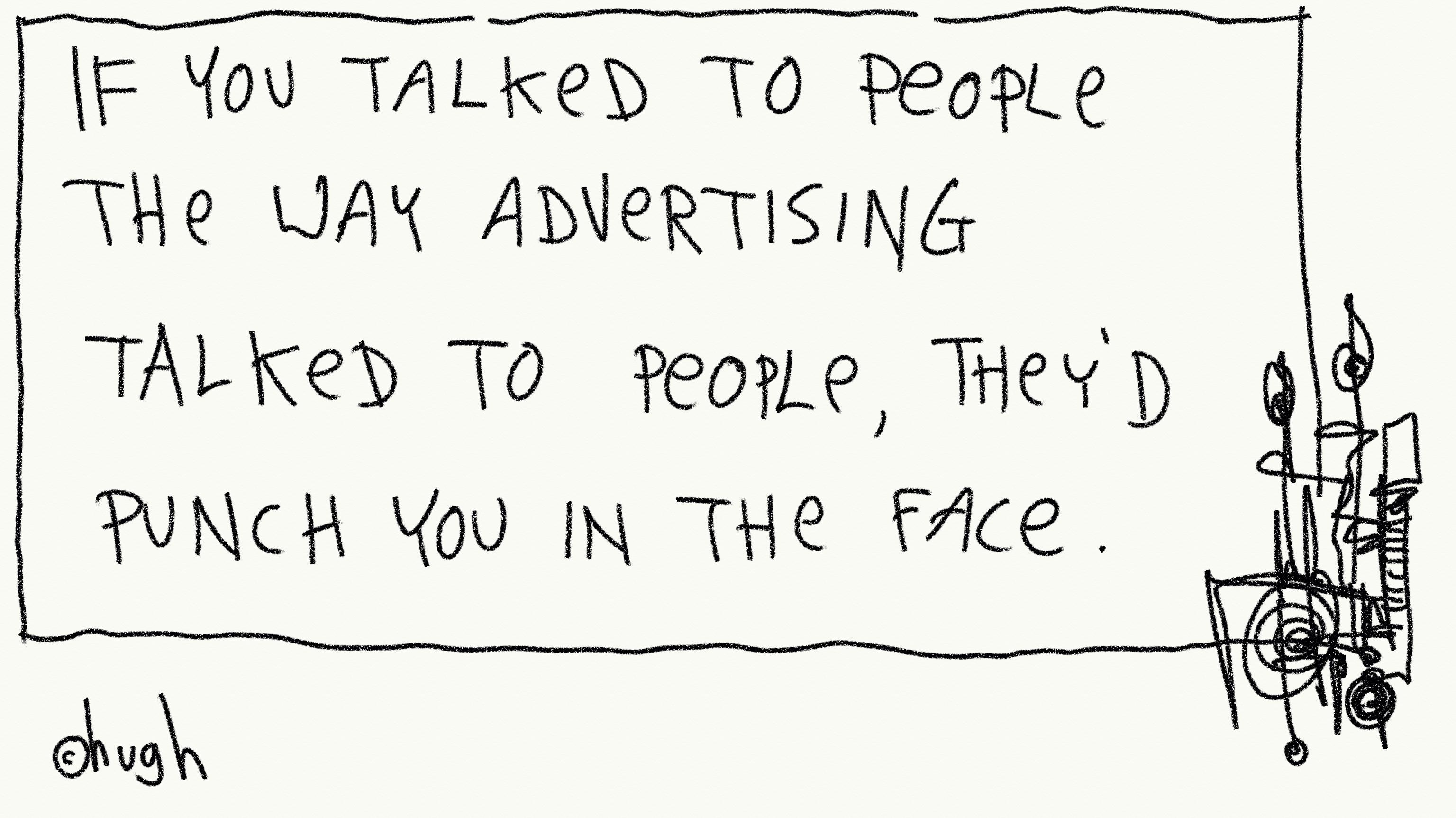
if you talked like advertising

If you’re like many advertisers, you think that all you have to do is put your ad in front of readers and the orders will pour in.  You love your product,  and you just know that your service is the greatest ever!

You think that if you just tell people about it, they’ll agree with  you.  Why, they’re just sitting at their desks waiting and hoping you’ll advertise to them.

No, not really.

There’s an ad for BMW on the New York Times web site today. The ad:

  • takes over the entire page
  • darkens everything else, except the ad video
  • prevents you from clicking on the content you came to read
  • is on a web site for a newspaper with a large readership in a city where most people don’t have or drive cars

It’s impersonal, irrelevant, and unwanted.  Nobody will want to watch your video, read your ad, or listen to your jingle unless there’s something in it for them.

Before you pay for that ad, create that video, or compose that jingle, think about what the customer gets.

Leave a comment and share examples of the biggest advertising mistakes you’ve ever seen.

Cartoon: Hugh MacLeod of Gaping Void

Got Questions? Get Answers! Ask Jodi!

question mark imageI get a lot of random questions from clients, family, and friends.

“Jodi, why do the pictures overlap the text on my Web site?”

“Jodi, why is it OK to send snail mail to people you don’t know, but not email?”

“Jodi, how do I stop spam on my blog?”

They think I’m Google. Heck some of them think I’m better than Google.

They say things like,
“Jodi – you are an amazing wealth of knowledge! You’re better than Google and Bing rolled into one!” — Bob Poole.

So, I decided to add a new feature to this blog (and my monthly newsletter, which comes out tomorrow). You’ll see it on the left, in the sidebar. I call it “Ask Jodi”!

Got a marketing question? Ask Jodi.

Photo: andreanna