About Jodi Kaplan

My Google Profile+

How to Go Viral

Viral campaigns can be a great way to get more attention, press coverage, and gigs. But how do you create one?

Marketing Sherpa (August 12, 2009) just shared the tactics used by past viral marketing honorees at its B2B Marketing Summit.

Why go viral?

The payoff is that you can start small and power up to 3,000,000 views on YouTube, network press coverage, industry coverage, blog coverage, and speaking gigs.

You don’t have to break your budget to do this, and of course, if you’re already in the video production business, you can do it yourself.

How to go viral

*create something that’s humorous, encourages involvement, and is worth spreading
* encourage viewers to add their own photos and comments
* include a “treasure hunt” or contest that requires visitors to search for something (and spend more time on your site while they do it)
* start with a small seed of existing clients and contacts
* add YouTube postings, and links on Facebook, MySpace, and LinkedIn
* send press releases to trade publications

My personal favorite on Marketing Sherpa’s list is VeriSign’s campaign featuring the fictitious Liberty Fillmore (Cart Whisperer), who shows us that abandoned shopping carts can be saved.

http://www.nomoreabandonedcarts.com/

This campaign works because it’s funny, asks viewers to share their own photos of abandoned carts, and includes a contest to find the wandering shopping cart on the site (it moves around every day). It has over 3.3 million views so far.

See more past winners and details of their winning campaigns (open access only until August 19).

Got your own campaign that’s gone big?

Want to be honored for it? Nominate yourself here (deadline is August 21).
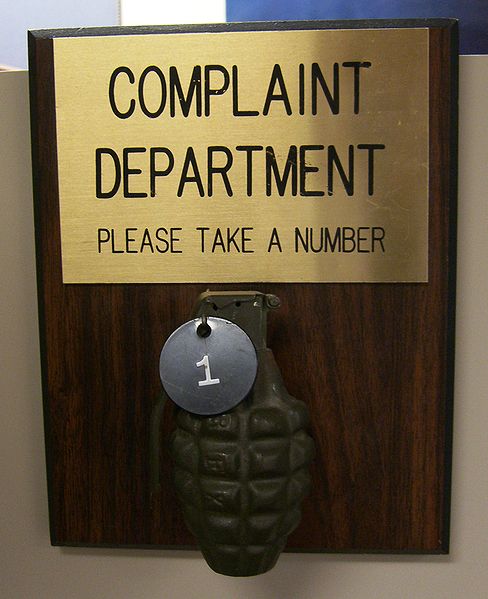
Photo: Mike Licht

Thank You For Complaining?

complaint department imageA few days ago, I got an unwanted marketing email from Ted’s Montana Grill. They had sponsored a recent HARO happy hour I’d signed up for, but that was my only contact with them. I had no relationship with them, and hadn’t given them permission to contact me.

I was pretty shocked and sent Peter an email complaining that sponsorship didn’t equal permission. He told me he’d make sure I was removed from their list.

Yesterday, someone from Ted’s called me from their headquarters in Atlanta. Apparently, their email service provider had a glitch. She thanked me repeatedly for complaining and bringing the problem to their attention!

Pretty remarkable.

Contrast this with Lexis/Nexis’s failure to manage a simple directory listing process. (I’ve spent over three hours trying to update a client’s listing and it’s still not right. Among other things, they’ve managed to misspell his name). It’s been over a month and it’s still not resolved.

Complaints can be an opportunity. If you get one, try to fix the problem. If you keep getting the same complaint (as Lexis admitted keeps happening), your customers are trying to tell you something. Listen to them.

Photo: wikimedia

Is Brand Advertising Useless?

branded cow imageAdvocates of “branding” will have you believe that it is essential to a company’s existence.

You must “leverage your brand,” have customers “engage with your brand,” “advertise your brand”… blah blah blah blah blah.

Branding is for cattle.

Marketing is for results.

Now, I’m not saying you shouldn’t have a well-designed logo. Nor am I suggesting that you shouldn’t think about what your company stands for, how you want to treat your customers, or what your Web site should look like (and how that reflects your company values).

What I am saying is that yelling about your brand is just that. Yelling. Nobody cares about your brand. Nobody sits at their desk saying, “I’d really like to engage with a brand today… which one will it be?”

What you do want is marketing. Measurable marketing with clear results. Internet marketing that drives visitors to landing pages (count the visits, count the clicks, count the orders). Print ads with calls to action. And, a Web site that trumpets what your clients get by choosing you.

Measure results. Make money. Know what works.

Photo: racatumba

Whoever Heard of a $75 Audiobook?

glowing mp3 playerSeveral friends have reported getting emails from Amazon urging them to buy audio books from Henning Mankell and Peter Robinson. Nothing odd about that, but it seems something at Amazon’s marketing department has gone horribly wrong. They’ve failed.

Here’s the key text from one of the emails:

“As someone who has purchased or rated books by John Marsden, you might like to know that The White Lioness: A Kurt Wallander Mystery will be released on August 1, 2009.  You can pre-order yours by following the link below.

The White Lioness: A Kurt Wallander Mystery
Henning Mankell
Price:
$74.99
Release Date: August 1, 2009”

Extra-Value Gone Wrong

I checked, and this is an old book. The paperback came out in 2003 and is available on Amazon for only $10.

I looked at the links and the audiobook is pre-loaded on some sort of player (no clue what kind). There’s nothing that tells you anything about the player, who makes it, or even whether you can add additional books.

It appears that Amazon is either trying to sell the book as an add-on for “extra value” to the player or thinks the player is an extra incentive to buy the book.

In either case, it’s clearly not working. Several pretty smart people think someone’s trying to sell them a $10 book for up to $120! No sale.

Anyone with any sense would skip the whole thing, get an older ipod shuffle for $45, and have plenty left over to download audiobooks elsewhere.

Add Value That’s Clearly Valuable

Adding extras is a great way to get more (or larger) sales.

Selling an e-book? Add extra bonuses (an audio version) for free, or add both an audio and a DVD for only $10 more. An audiobook/ebook combination can be worth $75 if it contains information you can’t find elsewhere or find easily. An ordinary reissue of a six-year-old book doesn’t count, unless it glows in the dark!

Photo: halighalie