About Jodi Kaplan

My Google Profile+

Email Marketing Gone Flat? 10 Ways to Fix It

improve email marketingHas your email marketing stopped working? Or never really taken off at all?

The right, or wrong, elements can make a big difference in whether your marketing emails drive sales, or even get opened. Here are 10 things that can help improve email marketing campaigns.

They can make the difference between a campaign that works, and one that flops.

1. Choose your list wisely

The most critical part of any email marketing campaign is the list.  The list accounts for 40% of your return. If you send it to the “wrong” people, it will fail, no matter how great the subject line, the product, or the offer. Don’t send everything to everyone, unless your list is very small or the people on it are very similar to each other.

Getting the list right will improve your email marketing more than anything else you do.

2. Write a great subject line

Once you’ve got a good list, the next critical factor to look at is the subject line. The subject line works like a headline in an ad. It has to grab the attention of the people receiving the email; otherwise they won’t open it. Make a big promise, set up a contradiction, or ask a question. Experiment, if you can, with different subject lines for the same email (by splitting up your list).  See which one works best.

3. Have an irresistible offer

This doesn’t have to be a sale. It’s simply what readers will get by responding. It’s got to be something people want (badly), that solves a troubling problem. Make it something people want, at a price that makes it easy to buy. Don’t make it cheap, make it great value for the money with bonuses, extra access, or greater speed.

4. Make a promise and paint a picture of the results

Create a vivid picture of what the customer gets. The customer has to be the hero (not you). Make the details all about how much money or time they’ll save, the problem they’ll solve, etc.

5. Call to action

If you don’t ask for a response, you won’t get one. Ask for the click, the sale, or the order straight out. Don’t be shy about it. Make the link stand out and the “order now” buttons a bright color.

6. Personalize the text

Use the recipient’s name. Everyone likes to see their own name in print. I had several lenses (little web sites) on Squidoo. Each time I logged in, the site greeted me by name and said something cheerful (Hey there, Jodi, good fortune awaits you at the end of the day). It’s silly, and I *know* that it does the same thing to everybody else, but it still made me smile).

7. Clear instructions on how to buy

Make it obvious what the reader has to do, and exactly how she should do it. Describe what will happen when she clicks or calls. Check to make sure everything is working properly (no broken links, missing information, or disconnected telephone extensions).

8. Limited offer

Give a compelling reason to act right away (a deadline, a limited number of registrations or appointments available, or extra bonuses).

9. Prove that your solution works

Don’t just make claims, prove them. Include testimonials from satisfied customers showing how happy they are. Include a free “sample,” such as pictures of exhibits you built, case studies of real-world projects, or before and after videos.

10. Use a landing page

A landing page is a single web page, or online sales letter created specifically for each campaign. The landing page tells your story, fills out the details of your offer, and makes the final sale. Never, ever send people to your home page.

Photo: crazy tales

Tomorrow is Freebie Friday, stay tuned for free email templates.
What Every Email Marketer Should Know Before Hitting “Send”

You probably know about how email marketing can lead to big profits.  It’s cheap to use, targeted, and easy to do.  Just type in your message and hit send.  Right?  Well, it’s a bit more complicated than that.
Before you start, there are four email marketing tips you should know about that can drastically affect the results you get.

1. Deliverability

This is the percentage of people on the list who actually received your email.  If nobody gets your email, they won’t open it, read it, or buy anything.

Why email bounces:

  • a bad address  (just like snail mail)
  • an ISP with a bad reputation
  • spammy content (make millions, free satellite TV, weight-loss pills)

Protect yourself by using a reputable email marketing company (I recommend AWeber. Use this link to sign up, and I’ll get some milkshake money) to deliver your email, cleaning your list regularly, and checking your content for content that can trigger a trip to the spam folder.  Use double opt-in (asking first for the email address and then for verification) to stop spammers.

2. Open rate

This is the number of people who open the email you sent.  You can increase this by:

  • using a from field from a real person (your name or company name), rather than something spammy (Acai Weight Loss Marketing)
  • writing a great headline that promises value and solutions to problems
  • make the first few sentences worth reading, since many people read email with a preview pane

3. Click through rate

This is the number of people who click through to the Web site with the rest of the sales pitch and the ordering information.  Click through is affected by:

  • copy  – building up the benefits, what people will get from your product, how you solve a problem
  • the offer – what they actually get when they click, such as a free report, details about a conference, or a video
  • formatting –  whether the paragraphs are long or short, if you used bullets, where the line breaks are

4. Conversion rate

The number (or percentage) of actual sales, leads, or opt-ins generated by the email.  Remember to use a landing page, not your home page, to make the rest of the sale.  The email “pre-sells’ the offer:  why you’re sending it, what you’re offering, what it will do for them, why they need to click now, what they should do once they get to the landing page.

5. Be human

Put a human, personal face (like your own, or the person who handles the account) on your messages. Include a name, photograph and contact information. Your customers will feel as if you’re talking directly to them. If you have a sales staff, they’ll feel more connected to “their” subscribers. It’s more personal, it creates a connection, and it establishes accountability.

Tomorrow, how to boost your email conversion rates and get more sales.

Photo:  wikimedia

5 Top Secrets of Ninja Copywriters

nikon ninja imageMany small businesses don’t know what they are, but successful copywriters have been using these copywriting secrets and tricks for years.

If you learn them and use them, you’ll be light-years ahead of your competitors. You don’t even have to get ninja training (unless you want to).

1. Promise something

It’s got to be something people want (and want badly) or a solution to a problem that’s got them tearing their hair out. Promise you can fix it (then explain how).

2. Make the customer the star

Don’t fill your blog or your ads with your 10 years of experience or the high-tech equipment you use. Instead, tell people what they will get.

If you create TV ads or Web video, skip the technical details of the shooting and editing process. Instead, focus on how even small businesses can use video on local TV or YouTube to make a big splash. Then highlight how well your other customers have done using your service.  Put the focus on what they accomplished (with your help, of course), rather than everything you did.

3. Appeal to their emotions

The classic appeals are “fear” and “greed.” People are afraid of making the wrong choices. In fact, they’re more afraid of losing something than they are motivated by gaining. Nobody wants to look bad to the boss, or lose their jobs. Greed works with fear, as people are afraid of losing what they have, and want more.

Emotions don’t have to be negative. You can also make a social connection and build trust. Be helpful. Offer free information. Reply to comments on your blog.

4. Be logical

Show the results that your clients get. Highlight the time or money they saved (be specific). Include testimonials from satisfied customers. Having someone else blow your horn is far more effective (and believable) than doing it yourself.

5. Use a P.S.

It’s one of the top places people look (after the headlines). Use it in marketing letters to repeat an important benefit or emphasize a deadline.

Photo:  striatic

The 1920 Guide to 21st Century Marketing

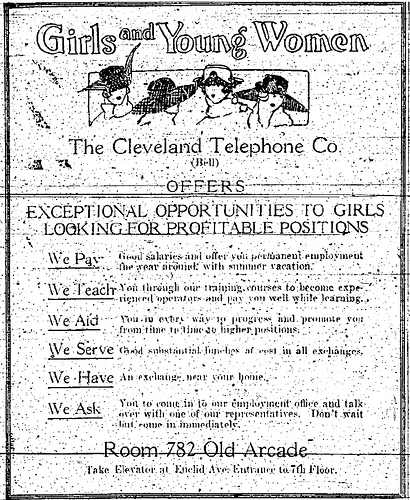
1920 ad image

You’re probably wondering how anything published in 1920 could possibly be relevant in 2009. No twitter tips? No super-networker’s secrets on using LinkedIn? Not one.

The closest thing they had to social media were dead-tree newspapers and radio. And, hey, the music and the clothes were weird.

Technology has changed, but basic marketing principles are still the same. Debates rage over long or short copy now (as they did then), some companies try to sell to everyone (while others focus on a niche), and everyone looking at your ad, reading your blog, or scanning your letter wants to know what’s in it for them.

Should my copy be long or short?

Write as much (or as little) as you need to tell your story. Long isn’t better, and short isn’t better. Better is what works with your customers.

Use headlines, bold type, and bullets. Break the copy up into chunks, so it’s more readable. People will skim, but if they’re interested, they will read more closely.

Sell to your target market (not everybody)

You are talking to thousands of people. Some will be interested (some won’t). The response of people “in your industry” doesn’t matter. The response of your potential customers does. Try to strike a chord with them. If you are advertising cars, you have no use for non-drivers.

Nobody will read your entire ad to find out if your product is appealing. They will glance at it, and decide based on the headline or the picture. Talk only to the people you seek as customers.

Be specific, not vague

Saying “the best in the world” or “lowest prices” or “reliable” simply states the expected and obvious. They often lead readers to discount what you say, rather than believe you.

Instead, be specific. If the exhibits you designed attracted 37% more traffic, say so. There’s a reason why Ivory Soap is marketed as 99 44/100% pure.

The book? It’s called Scientific Advertising by Claude C. Hopkins. Click here for your free copy.

Photo: ClevelandSGS

9 Steps to Writing a Better Blog

build blog image

Blogging can be a bit scary (especially when you first start out). Staring at that blank screen can be intimidating. What do I write? Will anyone read it?

Here are nine ways to make your blog better.

  1. Write a great headline.   Some say write the headline first, others suggest doing it last. Either way, the headline is what draws people in and gets them to read more.
  2. Use subheads.  These are little signposts that point out new, important points.  They’re helpful for people who skim (rather than read every word), and also for search engines.  Use <h2> tags in your subheads to signal, “hey, this is important stuff.”
  3. Write short paragraphs.  They’re much easier to read online than long blocks of text.
  4. Use short, easy words. It’s tempting (especially if you’re a writer) to show off your vocabulary, but don’t do it. Write conversationally instead. Pretend you’re talking to a friend.
  5. Build a series of posts.  They’ll keep people reading (and coming back) to see what happens next.  Think of soap operas or cartoons (tune in next week, when Penelope says….).
  6. Take that series and bundle it into a free report (I shamelessly stole this idea from Problogger).
  7. Be passionate about what you’re writing about. If you’re bored, your readers will be too.
  8. Encourage comments.  Ask readers what they think, to make suggestions, or to share their own experiences.
  9. Respond to the comments you get, and interact with your readers.  It’s OK if people disagree; if someone gets nasty you can delete them.

What are your blogging tips?  Share them here.

Photo: cecio