About Jodi Kaplan

My Google Profile+

Do You Make These Six Web Site Mistakes?

Does your Web site invite visitors to linger? Or drive them away? The first few seconds are critical to making a good impression. Here are six common mistakes many business owners make (and how to fix them).

1) Graphic-heavy sites that take a long time to load. If it takes 20 seconds on a fast connection, it’s too slow. Amazon loads in a second or two. Rethink the size of your images, and in most cases, ditch the Flash intro.

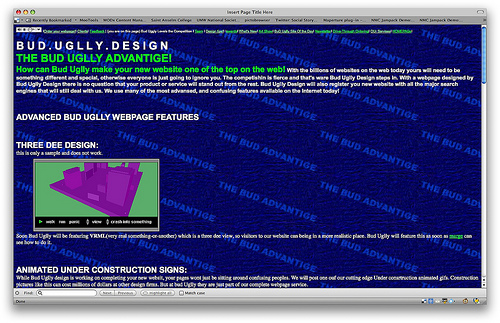
2) Light type on a dark background. I just saw this twice yesterday. It’s hard to read. Use contrast, and a light background with dark type for better legibility. Reading on a computer is harder than on a printed page. If you’re not sure what colors to  use, try color combos.

3) Fuzzy solutions to unclear problems. Be clear about who your customers are and what problem you solve. Talk about the pain they have (not yours) and what you’ll do to make it stop. One of the sites I looked at yesterday said was offering web hosting services. It said, “Want to build your Web site, we’ll do it for you.” It’s unclear who the customer is or what the benefits of using this company are. Is the site for people with technical know-how who want a reliable web host? Or, is it aimed at people who don’t know (or care) how to build a site and want someone to do it for them?

4) Asking for love, without trust. Would you ask someone to marry you after the first date? Or, as Chris Brogan vividly puts it, “put your tongue in the ear of someone who is trying to shake your hand?” Of course not. So, don’t put up big buttons asking people to follow you on Twitter, or spread your name to social bookmarking sites, unless and until you have gained their trust. Give them something worth spreading first. Be worth talking about. Then, and only then, have you earned the right to ask for something in return.

5) Unclear target customer. This same web hosting company offered bulk transfers, SSL certificates, and all sorts of complicated Web services. It was also promoting site building help and ease of use. One set of offerings seemed meant for beginners and people lacking Web expertise. The other set was targeted at network administrators with high-level technical skills. They were all lumped together and it was confusing. If you must sell to two such different customers separate the pitches. Have one page or menu button leading to information for beginners and another with information for experts.

6) Hard for new visitors to use. It may be obvious to you, but not your visitors. Have someone new try it. Watch them while they do it. See whether they can find what they want easily. Check what they read, and what they skip over. Darren Rowse has a First Time Reader Audit with more details (he’s talking about blogs, but the principles apply to Web sites too).

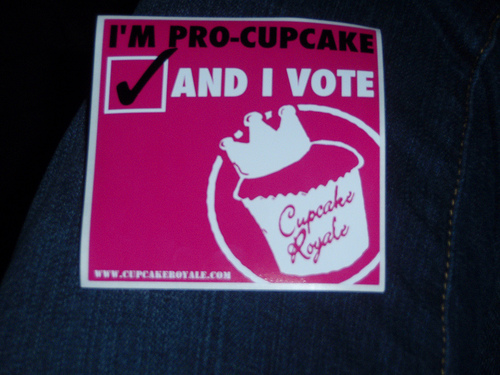
Photo: cogdogblog

Is Your Web Site Missing Vital Information?

information desk

Visitors to your site may arrive by keywords, searching specifically for your site, or trying to solve a problem. In addition to selling, offer useful information that will keep visitors coming back (and establish your company as an expert source of information and advice).

Add articles and how-tos

Offer tips on using your product. If you sell video games, give advice on getting past the angry gang at Level 14. If you sell dog food, have a section on why eggs are good for dogs.

An accounting software company could offer guides to running general ledger, accounts payable and other reports. AWeber (an email marketing campaign company) has an extensive knowledge base of tutorials, webinars, and videos covering every step of an email marketing campaign, from how to set up the initial message to creating forms to autoresponders (one or a series of emails sent automatically, such as an e-course).

Start a blog

This is also a chance to interact with prospects and customers. Showcase your expertise, and talk back (through comments and e-mail). It’s also good for search engine results (frequently updated copy gets Google’s attention).

I’m using WordPress for this blog; most hosting companies include it with their regular service, so you don’t even have to pay extra. Ask yours for more details on how to install it.

Write a white paper or report

Address a particularly vexing problem in your industry, or a point of pain for your customers. If you’re a computer expert write “10 Ways to Keep Your PC Safe From Viruses”. Offer it as a download and use it to build your contact list of potential prospects.

Produce a newsletter

Offer it to the people who download your white paper. It allows you to keep in contact with potential clients. Include information that’s useful. Don’t make it a hard sell. You want to keep your prospects engaged and interested (not turn them off).

After a few months, add back issues of your newsletter to your Web site (it offers fresh content, also liked by search engines, and offers a single place to find older issues (easier than searching through Outlook!).

Photo: maccath

A Forgotten (but Proven) Way to Involve Your Customers

pro-cupcake stickerEver open one of those Publishers’ Clearinghouse envelopes? Remember the little stickers with magazine covers that you had to paste on your return form? And all the pieces of paper in the envelope? A letter, the stickers, small slips of paper, “handwritten” notes.

It may seem a bit silly to include all that stuff. It made the envelope thicker, it was harder to mail, and cost more in postage.

The Method in the Madness

All those stickers and bits of paper were involvement devices; designed to engage the recipient and increase her commitment to returning the form, buying magazines, or entering the contest.

How You Can Engage Your Customers

The involvement devices have evolved since the early days of direct mail (though those stickers are still there), but the principle is the same.

Instead of stickers, we have baseball teams inviting fans to buy bricks for the walkway outside a new stadium, and inscribe them with personal messages. Fans of the Stephanie Plum mysteries are encouraged to make their own videos and upload them. Email newsletters sent by video game producers run contests and give tips on playing the games.

More Involvement Equals More Interest

The more involvement, the greater the identification with the company, the brand, and the more enthusiasm when a new game, or a “real” movie comes out.

You can engage your own customers by asking for opinions, inviting video feedback, running contests, or asking for your customers’ votes on a new logo or new product.

Oh, and those little stickers still work.

P.S. Since this is an involvement post, I’d like yours. What have you done to engage your customers? Did it work? Share it here.

Photo: rachel

Make an Offer They Won’t Refuse

godfather pose

Last week, I asked are your ads in the right place? But before you do place an ad, you need to know what you’re going to offer the people who see it.

Is an offer a discount?

Nope, not necessarily.  It just means whatever people get when they respond. It could be 2 for 1, or it could be an extra gift, or it could be your regular price. For instance, 5 lemons for $1 is one offer, 20c per lemon is a different offer.

A good offer

A continuity Hispanic music club was advertising its CDs on a popular Spanish language variety show. They had the right “list” for their ads (Spanish-speaking people who enjoyed popular music). The offer was appealing: buy 10 for $1, then get 5 more at regular price for the next year. Viewers got a good deal on the CDs, and had a large selection to choose from.

A bad offer

The same company decided to change the offer. They switched to offering only 5 specific CDs for $5. Still a good deal, but it didn’t work. Why? Because the choices were now drastically limited. If you already had one of the CDs why buy it again? Or, why buy a Celia Cruz album when you really wanted Tito Puente?

Bonus tip:

$5 off a $25 purchase seems like a better deal than $10 off a $50 purchase (even though it isn’t).

moria

Freebie Friday: Turn Your Advertising into a Science

freebie friday

Today’s Freebie Friday is a book written in 1923. While some of the references are a bit quaint and the brands long-gone, the information inside is as true now as it was then.

Even back then, there was a raging argument over whether copy should be long or short, because ‘people don’t read.’

In fact, this book is the basis for modern direct marketing (which is the basis for measurable internet marketing).

Should you say you’re the best in the world?

Does claiming the lowest prices in existence drive more sales?

Is it a good idea to focus on a specific group, or is it better to talk to as many people as possible?

To find out, <scientific-advertising>download your free copy of Scientific Advertising.