About Jodi Kaplan

My Google Profile+

How to Get Groupies (Even If You’re Not a Rock Star)

rock concert

Rock star fans will travel miles to see their favorite band. They’ll wait in line for hours, in the cold, the rain, and snow, hoping for tickets. They’ll collect posters, share favorite songs (sing the lyrics), and memorize every word of the lyrics. Before the Web, there were liner notes. Now, there’s official web sites, twitter streams, and fan pages.

You may not be a rock star, but you can still have enthusiastic followers. Here’s how:

  • Offer additional formats for a small additional charge.
  • Collect information about what your customers want/need and develop new products/services based on their answers. You can do this for free with surveymonkey.
  • At a trade show, ask prospects to fill out a questionnaire (in order to gain permission to talk to them). Offer a prize as a reward. You’ll get better leads, plus information you can use to target your promotions.
  • Email customers when a new product or service arrives that’s relevant to their problem or interests. What if your favorite bookstore emailed (or tweeted) when the latest mystery by your favorite author arrived?
  • Use your newsletter to conduct polls, give tips on how to use your product, and direct customers to complementary products.
Photo: anirud hkoul

What do Landing Pages Have in Common with Grade School?

classroom
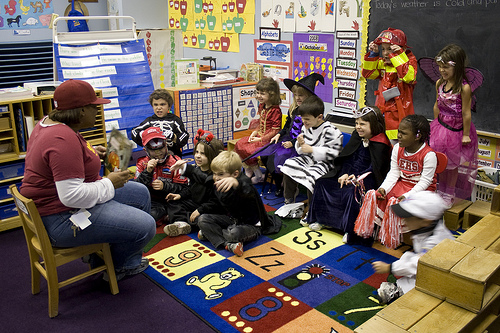
Remember back in school when the teacher assigned homework on current events? First you had to find a story, then you had to play reporter. You always had to talk about WHO, WHAT, WHEN, WHERE, HOW, and WHY.

Well, landing pages are like that too. In case you’re not familiar with them, a landing page is a Web page set up as part of a promotional campaign. You develop them as a arrival point for different products and services based on keyword searches, email campaigns, TV, or even print.

What does this have to do with current events homework? The landing page has to follow a similar format.

WHO: Who are your customers (seniors, teenagers, business owners, moms, VPs of Marketing)?

WHAT: What are you selling, and what do you want people to do once they reach your page?

WHEN: Is the offer limited? Must they act now? Or is it “evergreen”?

WHERE: Where should visitors go on your page? Is it clear?

HOW: How do they respond or order? Click on a button? Call?

WHY: Why should people buy from you? What problem do they have? How do you solve it?

Focus on one thing only. Don’t try to sell four or five things on the same landing page. If you want to promote five products, make a separate page for each one. Make the call to action (click here, buy here) clear and big and obvious.

I saw a landing page for a summer camp recently that looked like a calendar. It listed several different sports (basketball, baseball, etc.) and the dates, but had no information on why anyone would want to send their child there. There were no clear buttons to sign-up or get more information.

The page had too much text and not enough pictures. If you operate a summer camp, have different pages for each sport. Show pictures of happy children playing. Paint a picture in words of the fun the children will have.

Organize the site for the buyer, not for yourself. Include separate menu bars for each audience. Use emotions, make them see the product. If you sell fruit, don’t say we have apples, pears, oranges, etc. Say, “these ripe, juicy Bartlett pears are so sweet and delicious you’ll need a napkin handy to wipe your chin.” See the difference?

Now go do your homework.


What Can A Jar of Jam Tell Us About Customer Service?

One Sunday afternoon a few months ago, I bit down on the PB &J sandwich I’d just made and it went *crunch*. I looked more closely, and found there was glass in it! (it’s OK, I wasn’t hurt).

I emailed Polaner (the jam company) and told them what happened. Less than 2 hours later (on a weekend), I got an email from Marge. She apologized profusely, told me she’d reported it to their Quality Assurance Manager at the plant, and asked for the UPC information for the product so they could track it through their system.

Why does this matter? I got an email from a real person. She apologized for the problem. She told me she’d taken steps to inform the appropriate people about it. She asked me for more details so they could track down the problem and correct it. Her actions let me know I was an important customer and that my problem mattered to the company.

This is not only good service, it’s also the best way to retain your customers. In fact, Internet Retailer just published a survey (4/3/09) which found that excellent customer service beat all other methods for keeping customers happy and loyal.

Finding glass in my jam was unpleasant, but I will buy that brand again, because they treated me well.

How to Use Email Autoresponders Effectively

email_meter

Autoresponders are the email marketer’s secret weapon.  Many forget this and just mechanically send out messages (or worse send out messages from an email box that isn’t even monitored).

However, used the right way, autoresponders can build trust with your readers, send more visitors to your website, and increase your business.

The most popular emails

Some of the most effective (and frequently opened) are welcome messages, thank yous, and transactional messages.  The reason these emails get the best open rates (nearly 50%) is because they are relevant to something the visitor just did, such as sign up or order something.  That’s the best time to talk to them and engage, when their interest in your company and products is high.

The next most effective emails are messages that are triggered when someone does something or that are connected to a specific event.  This includes activating a special code, an anniversary or birthday, or a renewal date.

The key is to balance your messages between information and sales.  Tip too much one way and you’ll get no sales (because you never asked); overbalance the other way and your subscribers will flee.

The right ways to use autoresponders

Welcome new subscribers to your e- newsletter.  Give them a clear idea what to expect from your messages.  You can even send a sample issue or an extra report as an added bonus.  It’s all part of building trust, and establishing yourself as an expert on the topics you choose to write about.

The more your readers trust you, the more likely they will be to buy from you, and to keep buying.

Help new customers use your product/service.  Send a series of helpful messages on how to use the product they just bought.  If you have a note taking app, highlight how to format the notes, or ways to add video or audio recordings to the text.  Point out hidden keystrokes or tool tips.  You want them to feel comfortable with the product, happy with their choice, and pleased with your service.

Create a virtual classroom. Offer a series of emails that teach your customers something in your area of expertise. Show them how to get more referral business. Or send a series of tips on techniques for protecting their computers from viruses.

Highlight past posts.  New subscribers haven’t seen your old blog posts or read your older reports.  If they’re still relevant, add them to your newsletters. Or send them as a separate series all centered around a particular topic. That way, you can get a second, segmented newsletter.

Sell something. Create a collection of past posts, or write extensive new material on a popular topic, and make it into an ebook.  Or, turn it into a paid course.  This is also a chance to upsell something.  People who bought your referral tips ebook might also be interested in a full-fledged course or a membership in a forum dedicated to getting more referral business.

Be responsive. If someone replies to your email with a question, answer it (and as promptly as feasible).  It’s a great opportunity to talk directly to a customer (or potential customer). If they have a problem, try to fix it.  If it’s a question, give them a thoughtful response.

Don’t just send an email saying, “We have received your message. We’ll get back to you.” That’s almost worse than no response. It’s canned and it sounds that way; it doesn’t show you’re trying to do anything about the problem.

This can also be a good source of more content or new products.  Are there questions that get asked over and over?  Do many people have the same problem?  Use that as the basis for a new course, a webinar, or an FAQ page.

Test and check

Once it’s all up and running, check your sign up rates carefully. See what percentage of subscribers are going through the entire signup process.  If they are abandoning it midway, where is the falloff occurring? At the confirmation?  After the download (if you have a free report)?  Or further down the line?

Look to see which emails in the series are doing better. Do some get opened more than others?  Which gets the most clicks?  Are you selling more of product A than product B?

Should the emails be longer, or are they too long?  You can check this by using multiple calls to action or links to the same spot and looking to see which links get more clicks.

Are your readers largely on desktop or on mobile?  If you have images, can they see them? Do you need to change the design accordingly?

Photo:    Tama Leaver

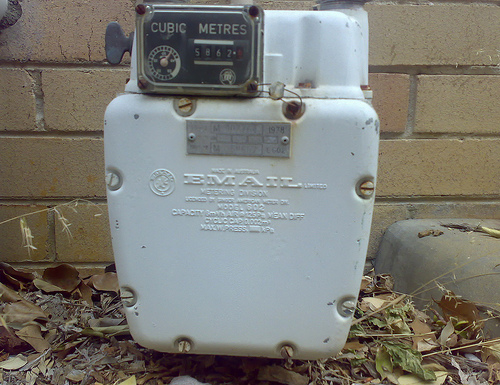
P.S. In case you’re wondering, the photo is an electric meter, circa 1968 Australia. EMAIL is an acronym.

What the IRS Knows About Service (and The Gap Doesn’t)

irs buildingA week ago, I thought the post office should be more like The Gap .

I’ve changed my mind. They should be more like… The IRS?!

I was at a Gap store on Sunday and it was mobbed. There was a long line for the dressing room, and once you got in, the staff was completely overwhelmed. There were only two people trying to manage what seemed like thousands of t-shirts, jeans, and skirts. The clothes were overflowing shelves, piled on top of racks, and falling on the floor.

I found a top I wanted to buy, and headed for the cash register. Again, there was a long line, with only 2 cashiers (out of 6 registers). I took one look and left without the top. Sorry Gap, no sale. While I’m sure that $14 more or less won’t make a significant impact on their bottom line, those lost sales do add up. I wonder how many other people abandoned their purchases that day?

Oddly, I did find a startling example of good service two days later… at the IRS. I wanted to check on my refund. They’ve got a site that gives you the estimated mail/transfer date, based on when you filed. Or, you can type in your Social Security or Tax ID number and get personal information! Wow! I’m impressed. If you want to check on your own refund, the site is here.

Photo: /functoruser