About Jodi Kaplan

My Google Profile+

How to Charge Higher Prices in a Recession

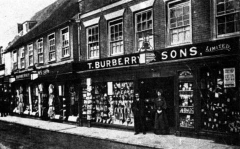
burberryWith the recession, it’s tempting to lower prices or offer discounts in order to attract sales. The trouble, as the car companies have found, is that they’re not adding any value to their products. The cars, the story the companies are telling, and the service haven’t changed.

There may be a recession, but people will pay for things that they perceive to be worth the extra money. Astronomy buffs will pay up to $100,00 for a telescope. Businesses will pay FedEx $15 to deliver a letter, when the post office would do it for 44 cents.

The reason is value. FedEx offers additional services, such as guaranteed delivery, end to end tracking, and overnight service. The extra value translates into extra dollars that their customers willingly pay.

Some ways to add value:

  • Bundle products or services together. If a muffin is $2.00, add the coffee for 50 cents more.
  • Add extra services (overnight delivery, tracking) that the competition doesn’t offer.
  • Offer a free extra with a minimum purchase (like Amazon does – this gets me every time, as I frantically look for something to buy to meet the $25 free shipping threshold). I want that free shipping, even though I sometimes end up spending more money to get it.
  • Present your fees in comparison to the money your client will save. Find out how much your client is losing in downtime, lost productivity, or stress. If the problem costs $100,000 a year, $10,000 to fix it saves her $90,000 annually or $450,000 over 5 years.
  • Break the cost down into a smaller piece: less than the price of a hamburger.
  • Compare the single initial outlay to the cost of multiple replacements. Many years ago, I paid $595 for a Burberry raincoat. I’d been buying cheap $85 raincoats every year for three years, and got fed up. I swallowed hard paying for that coat, but I still have it (in perfect condition, and they’ll replace worn buckles for free). Buying new cheap raincoats would have cost me a total of $1,955. That expensive coat saved me $1,360.

What are you doing to increase your value? Share your stories and tips.

Photo: Wikimedia, public domain

Are You a Purple Cow or a Brown Cow?

purple cow“Chrysler offering up to $6K in rebates”

“$1,000 cash back on GM cars”

“0% Financing”

The US car companies are in deep trouble; and they’re trying to get out of it using the same tactics they’ve always used. Someone once said that doing the same thing and expecting a different result is a good definition of insanity.

Their marketing is broken.

If your business is floundering, and the old model doesn’t work, why not try something different?

Where’s the green/biodegradable/100% recyclable car?

Or, the car that’s so easy to maintain, anyone can do it with a few simple tools.

What about the car company that promises its certified mechanics will fix whatever is wrong with your car – or it’s free.

Or the company that let you order options separately (instead of a package).

Why not ask buyers what features they want most? And then sell cars with those features only? Or enable greater customization?

How about dealers that build relationships with buyers by sending birthday cards., or a mechanic that sends flowers after a big bill.

Or, a newsletter with car maintenance tips and reminders to come in for service.

Even if you’re not a car company, you can (and should) stand out. Be the shoe company that gives away a pair of shoes for each pair purchased. Or, the computer company that sends its own, certified tech to fix your computer when it breaks (for free). How about the furniture company that delivers in 5 days (and lets you choose the time)?

Be remarkable (not boring) and people will talk about you.

Photo: heiwa4126

Use These Tips for Postcard Marketing Success

grand centralMarketing with postcards isn’t flashy, but it does work (and unlike email there’s no spam filter).

In fact, Marketing Sherpa reported (5/7/09) that one IT company used postcards to increase Web site visits 125%, boosted average time on site by 106%, and raised monthly email newsletter signups by 117%.

Here are some tips for successful postcard marketing that you can use in your own campaigns.

A great headline and an appealing image

You only have a few seconds, so focus on a clear benefit and use a memorable image.

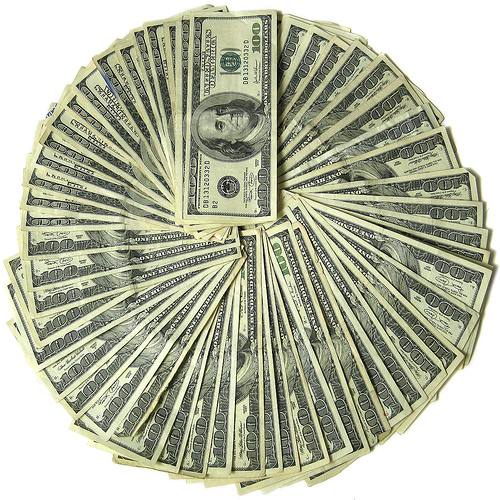
In this case, the picture on the front showed a man clutching a fistful of money, with the headline, “Get a Grip On Your IT Expenses.”

Be specific

The postcard offered several benefits (fixed costs, purchasing “chunks” of IT service time, and on-call support. It would be even better with testimonials or numbers showing exactly how much customers save by using managed IT services: “Now, you can cut your IT costs by up to 37%.”

Connect with your audience

Use emotional triggers that encourage curiosity, a sense of security, or urgency. People want to save money, gain respect, and avoid discomfort. Paint a clear picture of what they will gain by using your product. Make their eyes open wider, pulse race, and mouth water.

Make a clear offer

Now, that you’ve got their attention, make an offer. Keep it something simple and low cost.  This is a postcard, so there’s not enough space to sell a complicated or expensive service.

The IT company offered a free evaluation of their prospects’ computer systems to see whether a managed (fixed-fee) solution would reduce costs. Give them a good reason to contact you.

Balance commitment and appeal

An offer that’s very appealing (free flat screen TV) will get a lot of responses, but the people who do so may be more interested in the TV than your product.

On the other hand, an offer with low appeal (free ads sent to your cell phone while you shop) or filling out long forms will reduce the number of people that reply.

Use a call to action

Don’t forget to ask for the response! If you don’t ask for the call or the sign up you won’t get it. Use large or bold type and offer several ways to respond. Include a phone number, an email address, and a Web address and (send your landing page to school).

Track your responses

Use a unique code, telephone number, or URL on each mailing. If you track your responses, you’ll know which lists (or offers, if you have more than one) are generating the most leads.

Photo:Sgeulachdan

What Can Archery Teach You About Marketing?

target

“Targeting Gone Wild
Reach 70 million people at MySpace”

I saw an ad with that headline on ProBlogger, and whoever paid for it has indeed gone wild (and crazy too). That’s not targeting, that’s closing your eyes, praying, and hoping to hit something.

70 million? 70 million what? Does it really pay to market to that many random people?

A better approach would be to create a profile of an ideal customer, and market specifically to businesses that fit that profile. As in archery, the closer you get to the center of the target, the better your score (and your revenue). In archery, the target is pretty clear. There are rings, worth different numbers of points.

You get more points if your arrow hits the center, and fewer points if you hit one of the outer rings; no points at all for hitting the white background (or the haystacks). So, how do you improve your marketing aim?

Develop a biography of your ideal customer

If it’s a business, think about what size company you want to support. Fortune 500 companies work differently (move more slowly and have more paperwork) than smaller firms. However, they also have larger budgets. Think about the kinds of services you want to offer and whether they are more suited to a large or small firm. A small business may not need a sophisticated bookkeeping program, but a large business will.

Where are your customers located?

Worldwide companies will have different needs than local businesses. Public companies have different reporting requirements than private firms. Can you support large companies with branches in many cities or countries? A web designer can easily support an international clientele, but a caterer can’t.

Focus on a specific industry or industries

What areas are you most expert in? For example, establishing yourself as the go-to company providing marketing for electrical distributors or the social media guru for pet stores will help you grow your niche (and improve your revenue).

Who do you want to reach?

Are you looking for the CIO or an HR manager? The CIO will have different problems (and need different solutions) than the HR manager. For instance, while both may be customers for software services, the CIO may be much more concerned about data backup systems, while the HR manager needs software to track employee sick days and vacation time.

What’s their budget?

Don’t aim your $5,000 solution (no matter how wonderful it is) at someone who is only authorized to spend $500. Look for the decision maker. Allow time for a decision. Businesses to business marketing is a bit different that consumer marketing. Generally, the time lines are longer, more specs are required, and more people may be involved in the process.

The better your aim; the better your results.

Photo: matt gibson/

15 Tips for Writing Emails That Make Money

write emails that make moneyWith the economy in trouble, more and more marketers are shifting their advertising dollars online. According to a recent report by Forrester Research (New York Times, May 5, 2009), many merchants think that online businesses can withstand the downturn better than bricks and mortar retailers. In fact, 90% said that e-mail marketing was a top priority.

Since email is relatively inexpensive, and can be produced quickly, it’s an attractive way to sell your products.  But, how do you do it correctly?

Here are 15 tips for writing emails that make money:

1. Start with the “From” Line. This, obviously, shows people who the email comes from. Use a real person’s name or the name of your product/store (Jodi Kaplan, The Gap). If it looks legitimate or familiar, people are more likely to open it.

2. Writing great “Subject Lines”

Subject lines are essentially headlines; they have to:

  • Get readers’ attention
  •  Not be too long (under 45 characters) so it doesn’t get cut off in the email window
  • Arouse interest so that people will open the email instead of trashing it

3. Lead off with a great headline. You have to keep their attention, or they’ll stop reading. Get them interested, and deliver a mini-version of your message. List what you’re offering, the benefits it delivers, and provide a way to respond (a link to a Web page, a phone number).

4. Give expanded information that covers benefits, information needed to make a decision, features, in greater detail. List what they will gain and build up the desire to get it.

5. Use a conversational tone of voice. Talk to your audience in plain English (use the mom test — if your mom can understand it, your readers will too). Don’t use lots of jargon, or sound hard sell or overly promotional. Talk or write as if you are talking to a friend.

6. Be specific about why they should buy your product or service Don’t say your quality is the “highest” or you take care of your customers. It’s meaningless. Be specific about why your quality is so good or the lengths you’ll go to help your customers. If you sell shoes, describe how your shoes are handmade by Italian craftsman, that it takes 25 hours to make each pair, that they’re custom-fit to each customer’s foot. And, you offer a no-questions asked, money-back guarantee (good at any time).

7. Engage your readers’ emotions.  The six best ones to use: greed, fear, guilt, exclusivity, anger, and deliverance (from problems).

Here’s why.

  • Greed: humans are greedy, we nearly always want more, which is why getting something for free works so well (especially if we think it’s valuable)
  • Fear: we’re afraid of things, such as losing our jobs, or not having enough money to retire
  • Guilt: we’re worried about working too hard, and not spending enough time with our families
  • Exclusivity: we like to have things that other people don’t have
  • Anger: seeing something we think is wrong makes us mad; fire people up about something that they don’t like. My taxes are how high? The politician did what and got away with it?
  • Deliverance: solutions to problems, no matter how large or small, are welcome.  We want fixes  – whether it’s losing weight, saving money, or organizing our closets

8. Repeat what people will get and how to get it, more than once. Put one link at the beginning, after that opening mini-paragraph, and another at the end. 95% of the clicks come from the first two links, so don’t use more than three.

9. Sign off with a real person’s name. Include your mail address and an opt-out statement with a link so that it is easy for people to remove themselves from your list if they want to.

10. Include a forward to a friend link to pass on your message to other people. And specifically ask your readers to share it.

11.  Add a P.S. after the closing. Offer more information, repeat a benefit, or just offer to answer any questions. Give a real contact (rather than customer service). This is an old snail mail trick that still works online.

12. Don’t use caps or bold or other formatting, in a plain text email. It won’t show. Instead put asterisks around headlines, and use dashes for bullet points.

13. Keep the lines short. Long sentences will get cut off or run too far down the page on a smart phone or tablet.  Keep the lines at about 60 characters to avoid strange line breaks.

14.  Write your email in Notepad or a plain text editor, rather than Word. Copying and pasting from Word into your email client can lead to strange text breaks, uneven alignment and odd formatting. I forgot this once, and spent an hour cleaning it up!

15. Keep it short. Your readers are buried under an avalanche of email every day, and attention spans are limited. Keep it under two pages of text.

 

Photo:a magill