About Jodi Kaplan

My Google Profile+

How to Get Free Publicity

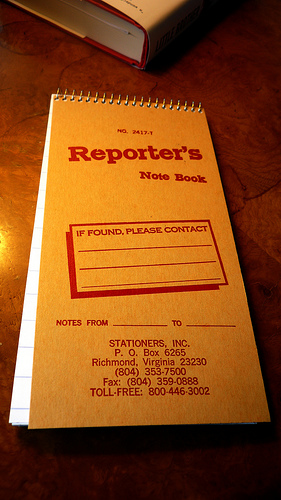
reporter notebook


Get Free Publicity for Your Company

Have you tried HARO yet? It’s Peter Shankman’s free PR newsletter that connects reporters looking for sources with people and businesses who are experts in their fields.

He emails three times a day with queries ranging from local freelancers to nationally recognized TV, newspapers, and magazines.

Read them carefully, and respond to the ones that are a perfect fit for your knowledge and experience. If the reporter wants a source for organic vegetable farmers and yours are grown conventionally – don’t respond.

Follow the instructions (subject line, email address to use, etc). The reporter may filter the requests to a specific email box. Responses that don’t go to the right place may get lost.

Include your contact information (phone, email, name, address, cell) so it’s easy for the reporter to reach you.

Keep in Touch With Your Clients

Use it as a way to connect with your clients (and get them some publicity too). If you see something that’s appropriate for your clients or contacts, pass it on with a note about the source and the rules. It’s a great way to build loyalty and provide an extra service your clients will appreciate.

Sign up here

Photo gruntzookie

Subscribing and Sharing

newspaper stack

First of all, thank you for visiting! I appreciate your comments, support, and trust.

If you’re not receiving a free subscription to this blog, there are lots of ways to get one (and share anything you find interesting).

RSS Reader

First, is the big, orange button in the top right hand corner. That’s an RSS reader. Click on it, and you’ll see a drop-down menu with different options (Bloglines, Google, and Yahoo!, among others). Choose the one you want and click the subscribe button. This sets up a bookmark in your browser’s toolbar. Click on it, and you’ll see the last five posts on this blog.

RSS reader Subscribe in an RSS reader.

Email

Enter your email address and get the blog delivered directly to your inbox.

Enter your email address:


Delivered by FeedBurner

Sharing, Tagging, and Stumbling

Click on the little orange bookmark box under each post and you’ll see lots of ways to bookmark, share, stumble and tag posts you want to share or remember.

Bookmark and Share

Send them to your friends, digg them, add them to Facebook, Twitter, or whatever social network site you like best.

Photo: DRB62

Learn These Trade Secrets

magazine standNearly every interest, business, industry, and activity has a newsletter or a magazine. These publications focus solely on people in particular industries. And most of them are free.

Here are 5 ways to use them:

1) Keep up with what’s going on in your industry, your customers’ problems (or the problems that businesses like them are having), and get information that will help you better serve your customers, or develop new products and services.

2) Many have online forums or email newsletters. Use the first to make useful (not promotional) comments. Answer questions and, where appropriate, point to an article or a resource on your Web site that will be helpful. This is also a good way to get traffic to your site. Once on that page, offer an e-book, or other “ethical bribe” to sign up for your newsletter.

3) As a promotional tool. Submit articles and get your name, and your business, in front of readers who are potential prospects. Just remember, write something that offers information and solutions, not a sales pitch. Check their editorial calendars (usually posted on their Web sites) and also look at the masthead to find the name of the editor. Writing articles in trade publications will raise your profile among your target audience, and establish you as a believable expert in your field.

4) Write letters to the editor (see yesterday’s post)

5) Advertise in their e-newsletters or in the magazine (if budget allows). Many also have event calendars, which you can use to publicize an upcoming conference or seminar.

To find a list of trade magazines, and subscribe, visit my Web site at KaplanCopy Trade Publication List

Photo: mannhobai

Get More Clicks (Without Spending a Cent)

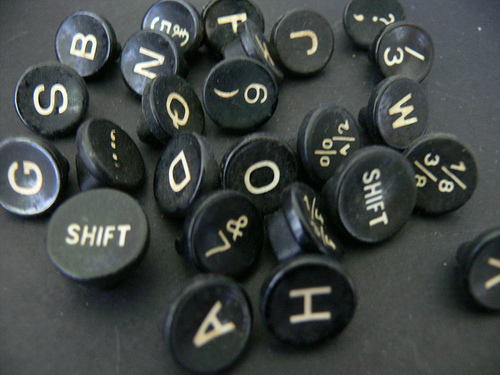
typewriter lettersI got 120 new visitors to my book web site yesterday (without spending a cent). There’s been a raging debate on Shelf Awareness (a book industry newsletter) about the pros and cons of e-books. I run a Squidoo lens arguing that printed books are better, so I decided to weigh in on the topic. I wrote a letter to the editor arguing that publishers (and authors) will have to change their strategies and interact with readers in order to survive, and included a link to my lens.

Shelf Awareness posted the letter in their newsletter, and the clicks started coming. 77 in the first hour and a half, about 87 by lunchtime and 120 by this morning. Letters to the editor may seem like a relic of the last century, but people still read them. And, with the Internet, instead of waiting days or weeks for the magazine to print, the response is virtually instantaneous. Even better, you can include a live link, so readers can click directly to your site for more information.

Remember, don’t be overtly promotional. Offer insights, useful information, and reasoned arguments for your position. Target the publications you write to. Keep them within your sphere of expertise. There’s no sense writing in to a neurosurgery magazine if you’re not a neurosurgeon. Then, sit back and watch the clicks roll in.

Photo: Laineys Repertoire

Why Does a Business Need Story Time?

business storytellingTwo very different conversations about business storytelling struck me today.

The first was Seth Godin’s post about the rational marketer (and the irrational customer):

The most common frustration I see, and I see it daily, comes from marketers who can’t figure out why more people won’t buy their product…Let’s say, for example, that you have a service that can deliver leads for five percent of what it costs to get them via a trade show. Why would any rational business, particularly one that says it wants qualified leads, spend that money on trade shows and not on you?…The problem is that your prospect doesn’t care about any of those things. He cares about his boss or the story you’re telling or the risk or the hassle of making a change.

The second was from a New York Times article about vitamins. It quoted a scientist who couldn’t understand why people buy vitamins (when study after study shows no positive effect from taking them).

I’m puzzled why the public in general ignores the results of well-done trials,’” said Dr. Eric Klein, national study coordinator for the prostate cancer trial and chairman of the Cleveland Clinic’s Glickman Urological and Kidney Institute. “’The public’s belief in the benefits of vitamins and nutrients is not supported by the available scientific data. (NY Times 2/17/09)

emotional business storytelling beats logic

The cold, hard dull facts may be truthful, but they’re not emotionally engaging.  Don’t give statistics, tell a business story instead.

Vitamin-takers (and prospects) don’t care what the studies say or how logical it is to skip the trade show and spend money on a different method of lead generation.

What they do care about it is how they feel about it. They “feel better” taking the vitamins. It doesn’t matter what the science says; the emotional payout is higher from taking the pills, plus it’s easier than changing your diet.

Going to the tradeshow is easier too, especially if it’s what you’ve always done.  Switching to a different lead generation method is hard. It takes work and it takes time to start working.

Emotional stories get more sales

Tell your prospects a story about how well your lead generation program worked for other customers: Customer XYZ started with three leads a month, struggling to stay afloat; after hiring us it was up to 10 per week. Now, they can make payroll easily every week, and they’re opening two new offices.

Focus on the emotional toll of the wrong solution, and then explain the feel-good payoff of the better choice.  Describe how your solution cuts your customers’ stress, or let’s them go home earlier, or may get them a raise.

 

Photo: yogi