How Postcards Can Help Your Email Marketing

What’s a postcard got to do with email anyway? You can’t send those things through the internet?

Turns out they do have something in common. A postcard-style email gets more clicks than a newsletter style email.

If you’re not sure what that means, a postcard email looks like a postcard.  It’s landscape (meaning wider than it’s tall), and not very long.

postcard from Wikipedia

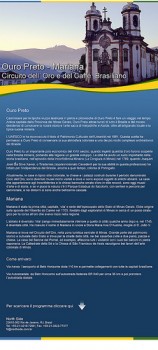
A newsletter style looks more like a newspaper (portrait, or longer than it is wide), like a portrait of a person.

newsletter by extrememidia

It’s a lot more text-heavy, and it’s longer.

The important thing is to tailor your text and design to your audience and their interests.  If they want a list of “top backpacks” and all they need is a quick list of them and ready to go buy, then give them that.  If it’s something more complex, such as a design service, then you’ll need more time and space to explain the benefits.

One non-profit used this technique for their year-end campaign. They sent a series of emails that looked like postcards – a headline, a photo, and a few short sentences.  Then one link, leading to a donation page. It boosted their response by 50% (full article at Marketing Sherpa, open access until August 5th).

Email me privately for personal help.

What a Party Can Teach You About Email Marketing

Took picture June 18, 2006 of a party hat I pu...

Image via Wikipedia

What do parties have to do with email marketing?

Both require planning, a good host, interesting conversation, and happy people (customers). Here’s how to make sure your party (email newsletter) is a great one.

Send invitations and request RSVPs

If you have a party, you send out invitations. People then respond (and accept or decline). You don’t just grab people off the street and pull them in. Same thing with email marketing.

You invite people, and you wait for them to accept (you don’t just start sending them emails because you met them at a breakfast meeting.

Why the party?

When you send out the invitations, you try to tell people why you’re having the party and how great it will be (hey everyone, it’s Gregor Mendel’s 189th birthday! Let’s party!). Offer the invitation (your signup form), describe how great the party will be (your ebook, or your webinar), and then ask them to accept (opt-in and confirm).

Greet your guests

Once that party gets under way, a good host greets each guest at the door. Likewise, send a welcome message to your new subscribers. Thank them for coming (signing up) and tell them a bit more about your party (the kinds of information they can expect to get from you). Show them around, point out the buffet and the bar. Give them a few links to relevant information on your site.

Stop by and chat

At a party, you mingle and make sure everyone’s having a good time. Check with your readers occasionally. Ask them for feedback with a survey. Or solicit ideas or comments (I add a PS telling my readers they can just hit reply to reach me).

Some guests leave early

Occasionally, a guest will decide your party is not for them.  If someone unsubsribes, let them go. It’s not legal in the US.   If too many people unsubscribe, take a look at  your newsletter and find out why.

Party favors

At a party, you might give out silly hats or serve food and cake.  Offer your newsletter readers goodies (just for signing up).  For example, they might be the first to get a crack at a new (paid) service.  Or, send the occasional, random free gift (an ebook, for example).

Invite your guests back

If you want to have another party (or start another newsletter), repeat the process. Invite your guests to the new party first (rather than automatically adding them to the guest list).


Email me privately for personal help.

Boost Your Email Click Through Rate by 85%

Magnify Glass and Money

Image by Images_of_Money via Flickr

Want more clicks on your emails?  Marketing Experiments recently held a webinar with lots of great tips on how to focus your emails to get more clicks and better conversions.

A test email that beat the control by 85%

The reason?  The test included an excerpt of a free ebook.  The control had a standard headline and bullet points.

The excerpt invited people to click – and keep reading. It followed a logical progression of thought.

Why conflating can kill your clicks

Conflating means you’re trying to do too many things at once, such as too many different calls to action, or trying to make your email do double-duty as a landing page (with too much information).

The point of an email is to start a conversation, not to be a full sales page.

Do you make these common email mistakes?

Participants submitted sample marketing emails for ‘live’ review.  Many were too busy (too many headlines), had too many images, used stock images,  or had no headline at all.

Others had lots of products (confusing), and then led to a page with more products (rather than the specific item you clicked on).

If there are product images (like flowers or cameras), then take them straight to that product page, with smaller links if they want to look at something else.

An email should look like a letter, not a web page.  The goal is to get clicks.

(You can watch the whole webinar here.

What do you think?  Would you be interested in seeing something similar here?

Email me privately for personal help.

7 Epic Email Marketing Failures

Red Fail

Image by griffithchris via Flickr

Email gone wrong can get really ugly.  There’s spamming people, there’s lack of permission, there’s confusing messages, and sometimes there’s just plain stupidity.

Here’s how email can go horribly wrong.

Me, me me!

So, a salesman really wants to win a company sales prize.  He sends out an email – telling his clients if they act soon they get a $25 certificate. Not bad, but his prize was much, much better. If you want to encourage people to do something, it should solve their problem, not yours.

Oops, no permission

I signed up for an event at a restaurant.  The place kept my name and started filling my inbox with coupons.  Event signup (through a third party) doesn’t equal marketing permission.

Irrelevant offers

Attention marketers, sending ads for diapers to someone who just bought razors makes no sense.  How about a coupon for shaving cream instead?

BCC

(Bangs head on desk).  I’ve seen people calling themselves experts say this, people on linkedin, it’s everywhere. Do not use bcc to send marketing emails with Outlook or Mail or any other email software.  Use a proper ESP.

Oops, no content

An email newsletter recently arrived in my inbox, with only the words “message here.” Um, yes, that’s where it goes.

Data failure (x3)

I got an email from an affiliate company warning me that their records showed I was using a tool that was being discontinued.  Um, no I wasn’t using it at all.

Then last week LinkedIn emailed me suggesting I join 4 groups – 3 of which I already belong to.

Here’s another one; US Airways sent a reward email to the wrong list. Then, didn’t make it up to them in any way.

It’s electronic!

A car dealer sent out an email that was just one big image.  It looked blank if you had images turned off.  If you went to the trouble to download the image (which was very large), it was just a reproduction of a handout flier.

If you’ve been marketing offline, adapt your offline marketing to the web.  Don’t make, well, a “meatball sundae.”

What’s the biggest, worst email marketing failure you’ve seen? Or received?

Email me privately for personal help.

7 Secrets of Great Email Subject Lines

email

Image by smemon87 via Flickr

The right email subject line can make a big difference in the number of people who open your email (and then click or buy something).

So, it’s important to make sure you write the best email subject line for your audience.

These copywriting secrets aren’t new. Claude Hopkins used them and David Ogilvy used them, even though neither one of them ever sent an email.

1. Borrow some tips from newspaper headlines

“How”, “What” and “Why” are all compelling ways to start your subject line. We all want to know ‘How a $200 Investment Became a Multi-Million Dollar Company” or “Why Eating More Can Help You Lose Weight.” If there’s an apparent contradiction, or it makes us curious, that’s even better. Yes, it’s old and hokey. Still works though.

2. Use the “secret” words

They’re not really secret, they’re just words that get people to stop and take notice. Words such as “free”, “secrets”, “quick” and “easy.” Everyone likes free stuff, and wants simple, quick solutions to their problems.

3. Numbers

You can use numbers in two different ways. First, as a list (5 Email Newsletter Essentials).  Second, as an indication of progress or improvement (How I Increased Clicks by 2300%.)

4. Comparisons

Make a comparison to something. This is especially effective if you compare something less known to something well-known or something that seems “wrong”.  For example,  “7 Reasons Why Target Jewelry is Better Than Tiffany’s” or “Why the Blair Witch Project is Scarier Than Nightmare on Elm Street. ”

5.  Commands and Challenges

Tell readers to do something, such as “take this test” or “test your skills”  Encourage them to find out how good/smart they are in comparison to everyone else.   Or, challenge them to do something, such as “Can your floor wax stand up to a troop of stampeding cub scouts?”

6. Promises to Achieve Goals

Make a promise that your readers can get something done (especially something that they’ve been struggling with).  Offer to show them how they can “Start a Profitable Business in Just 30 Days” or “Finally, Get Rid of Stubborn Bathroom Mold.”

7. Offer something exclusive or limited

Limited offers and exclusive special deals can be very powerful (that’s why Groupon and w00t work so well).  If there are only a few books, coupons, deals, gadgets available, or they’re only on sale for a limited time, they become much more appealing.

Email me privately for personal help.