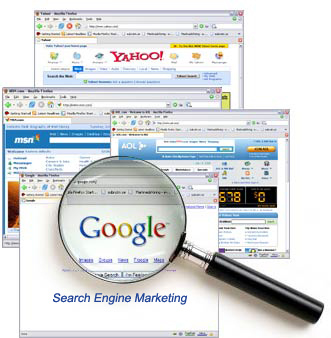
The Truth About Internet Marketing

Someone on LinkedIn said that Internet Marketing is “new”, “there’s never been anything like it.”  It’s true that there are lots of new tools, such as SEO, pay per click, social networking, e-mail, or even e-bay that weren’t available 20 years ago.

However, the basic principles of marketing haven’t changed, only the means and the speed.  Regardless of whether you’re using print or pixels, you still need to reach the right people.  If you sell custom car parts for racing enthusiasts, you have to reach out to people in that particular tribe.

You must then establish a conversation with them.  Talk  to them about their interests, their problems, and their enthusiasm for racing.  Show that you share that enthusiasm.  Gain their trust.

Then offer them something of interest (free newsletter with sources for custom paint jobs, new parts or tools on the market), a discount coupon, etc.

Finally, ask for action (join here, call this number).

Photo: web success diva

Is Social Networking Useless?

social networkLast Thursday, Bob Bly asked his readers
whether they agreed with Kent Lewis, President of Anvil Media that social media is not an effective marketing tool. Mr. Lewis, who was interviewed by DM News, (3/2/09, p.10) stated that he saw social media networks as personal collaboration tools, rather than an information or research source. Commenting on this, Bly said that he’d tried Twitter and found it mostly a bunch of useless gab.

I agree that Twitter (and Facebook and etc.) can certainly be a giant waste of time, but there are opportunities there as well.

For example,

  • an airline sending tweets to passengers that their flight is delayed
  • a popular restaurant announcing that there are a few reservations available for that night (first tweet back, first served)
  • reporters tweeting queries to a service that broadcasts their queries (HARO)
  • a cable company using Twitter to communicate with customers having problems (and get them fixed)
  • a friend used it to get sponsors for a project
  • Tribes, which has not only connected people all over the world, but produced two e-books (group), inspired several more, plus blogs, and collaboration on real-world projects

What do you think? Waste of time? Or useful tool? Chime in!

Photo: luc legay

Is SEO the Answer to All Business Marketing?

David Meerman Scott’s post yesterday about SEO and your crap filled site reminded me of a recent conversation I had. A client had just hired a new CEO, who was gung ho about SEO. He’d gotten good results at his previous job and was all excited about applying the same principles at his new company.

Sounds good? Well, it wasn’t. The trouble wasn’t lack of traffic. They had a well-known brand, and lots of visitors to the site. The problem was that the site was huge – hundreds and hundreds of pages. The content was hard to find. It took 8-10 pages to register for an event. You couldn’t use credit cards directly, you had to go through paypal (and leave the company’s site). It was confusing and took too much time.

The problem wasn’t an SEO issue, it was a usability issue. The site needed to be streamlined, updated, and re-tuned for the customer (not the company).

Face toward your customers, not toward yourself.

Danard Vincente

Teach Your Parents Well

crosby stills nashMy dad thanked me yesterday. He told me I’d trained him well. You see, he’s a member of the local library board. For some reason, the town (which is in a well-to-do area) doesn’t include the library in the regular tax rolls, so every time the library needs improvements, they have to get approval from the voters for a special bond issue to fund the project.

So, naturally, they need a marketing campaign of sorts to convince the town that the project has merit. Dad was at a board meeting last night and asked “What are the benefits?, Why would the town approve this?”

The reply, “Well it’s crowded, we need more space.”

Dad said, “So what?”

Another member chimed in, “Well, some of the books are old and falling apart.”

Dad again, “So what?”

His point (and mine) is that the board was framing the issue looking at themselves (instead of the voters). The voters don’t care about the old books or the overcrowding. They care about an extra room for story time for small children (and a safe place to drop them off while mom or dad runs errands). They care that the library has the books they want, or is open on Saturdays, or later into the evening on weekdays. They care about BENEFITS. They care about what’s in it for them, not what the library gets.

Keep that in mind when planning your next campaign.

Photo modesto speed

Ten Reasons Your Brochure Gets No Sales

cheese curd

1. You’re spraying and praying

It’s unfocused, you haven’t established a niche or differentiated yourself. If you’re closing your eyes and hoping to hit something, you probably won’t. Build a target audience (see #5).

2. You’re trying to compete on price (and losing sales)

People buy what they want. The job of your brochure (or any other sales materials) is to convince people that you’re the right person or company to help them get what they want – whether it’s a more attractive web site, a blog, a brochure, or a higher ranking in Google.

3. It’s all about you. You’re using, “I” and “me” and “we” too much

If your brochure talks about your background, your company history, and your credentials, it’s time for a rewrite. Readers want to hear about themselves, their problems, and then your solutions. In that order.

4. There’s no definite purpose.

It’s got lots of information, but no direction – you don’t know what it’s for (generating leads, brand awareness, general information, inquiries, sales)

5. Your audience isn’t clear.

Who are you talking to? What kinds of people (animals, vegetables, minerals)? You need a target audience – so you can clearly show that you understand their problems and how to fix them.

6. I don’t know what to do after I read it.

No clear call to action. If you don’t ask, you won’t get. Make sure that it’s absolutely clear what you want people to do, and what will happen when they do it.

7. It’s 11 pages long.

It’s a lot to wade through online, and intimidating off-line. Say what you need to say to convince the prospect to take action, but don’t bury them.

8. There’s a lot of talking, but no clear idea what problem you solve, or why I should trust you.

9. There’s too much about you (not enough about me).

Your awards are great (if you have them), but they don’t solve problems. What have you done to help other companies? Do you have testimonials? If you do, share them. Show me what you can do for me (remember, the world’s most popular radio station is WIIFM – what’s in it for me).

10. You’re trying to catch fish with strawberries; offering “bait” that nobody wants.

I saw someone recently asking if people would buy a software program that let you surf the Web from a boot up disk. No viruses, but you had to boot separately, and there were ads. The spam-free promise is great, but nobody will want to surf the Web from a boot disk!

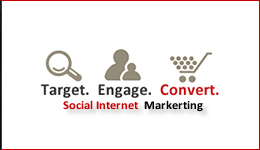
Photo: jordan fischer